Ajuga: Mastering Gothic Typography in Modern Design
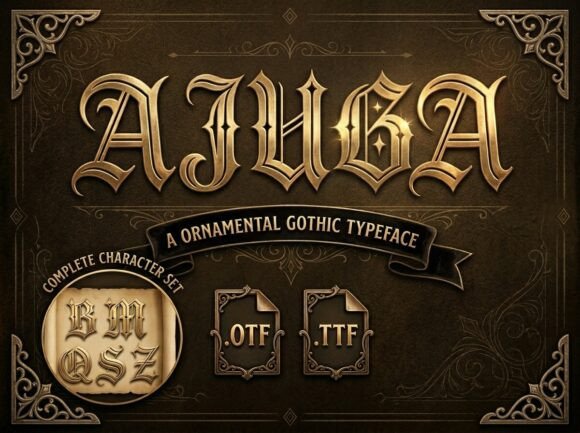
In the crowded landscape of modern typography, finding a typeface that commands immediate attention and conveys a sense of history is a rare discovery. Step into a realm of medieval majesty with Ajuga, a breathtaking ornamental Gothic typeface that commands respect and wonder. This font is a masterclass in Blackletter design, featuring sharp, dramatic angles and intricate diamond-cut details that give every letter a chiseled, metallic appearance. Its golden-toned, 3D aesthetic evokes the opulence of ancient illuminated manuscripts and royal decrees. Whether you are designing for a dark fantasy epic, a luxury craft brewery, a heavy metal brand, or high-end vintage packaging, Ajuga provides a legendary presence that is as timeless as it is bold.
The Anatomy of a Legendary Typeface
From a graphic design perspective, Ajuga is more than just a decorative font; it is a statement piece. The Blackletter tradition it draws from is steeped in history, but Ajuga updates this classic style with a contemporary, almost cinematic flair. The sharp, dramatic angles and intricate diamond-cut details are not merely ornamental. They create a powerful visual hierarchy, making it an ideal choice for headlines, logos, and display text where impact is paramount. The chiseled, metallic appearance suggests strength, tradition, and luxury, making it a potent tool for visual communication.
Practical Applications for Visual Impact
The true value of a creative asset like Ajuga lies in its versatility across different media. Its unique aesthetic can elevate a wide range of creative projects, helping to establish a distinct and memorable brand identity.
- Branding and Logo Design: For brands aiming to project heritage, authority, or a dark, luxurious edge, Ajuga is unparalleled. It instantly gives a logo or wordmark a sense of gravitas, perfect for craft breweries, distilleries, bespoke tailors, or fantasy-themed entertainment.
- Packaging Design: On a shelf, Ajuga makes a product impossible to ignore. Its detailed letterforms create a tactile, premium feel for product labels, especially in the food, beverage, or cosmetics sectors where vintage or artisanal aesthetics are key.
- Editorial and Print Design: Use Ajuga for chapter headings in a novel, the masthead of a niche magazine, or the title of an event poster. It sets a dramatic tone and enhances the overall user experience by signaling the content's character.
- Digital Marketing and Social Media: In a fast-scrolling feed, a striking typographic hero image using Ajuga can stop thumbs. It is highly effective for creating compelling social media graphics, YouTube thumbnails, or digital advertisements for events, album launches, or product drops.
- Web and UI Design: While not suited for body text, Ajuga can be a powerful element in website headers, hero sections, or as part of a branding kit for a game or entertainment platform. It contributes to a strong visual hierarchy and immersive user experience.
Integrating Ajuga into Your Design Workflow
Successfully incorporating a bold typeface like Ajuga requires thoughtful consideration of its context. It is a tool for emphasis, not for continuous reading. For optimal results, pair it with a clean, highly legible sans-serif or serif font for body text to ensure readability and create a balanced composition. Consider your existing color palette; Ajuga’s detailed forms work beautifully against solid, dark backgrounds or textured surfaces that complement its medieval roots.
When evaluating any powerful design asset, always consider its scalability. Test how the typeface renders at both large display sizes and smaller thumbnail dimensions to ensure the intricate details remain effective. Understanding your audience's expectations is crucial—Ajuga’s specific style communicates a clear message, so it should align with your overall design goals and brand narrative.
Ultimately, the most compelling designs are built on intentional choices. Selecting a typeface like Ajuga is not just about aesthetic preference; it is a strategic decision to inject personality, history, and authority into your work. By thoughtfully integrating such high-quality creative assets, you move beyond mere decoration to craft a cohesive visual story that resonates deeply with your audience, elevating both the beauty and the clarity of your communication.